
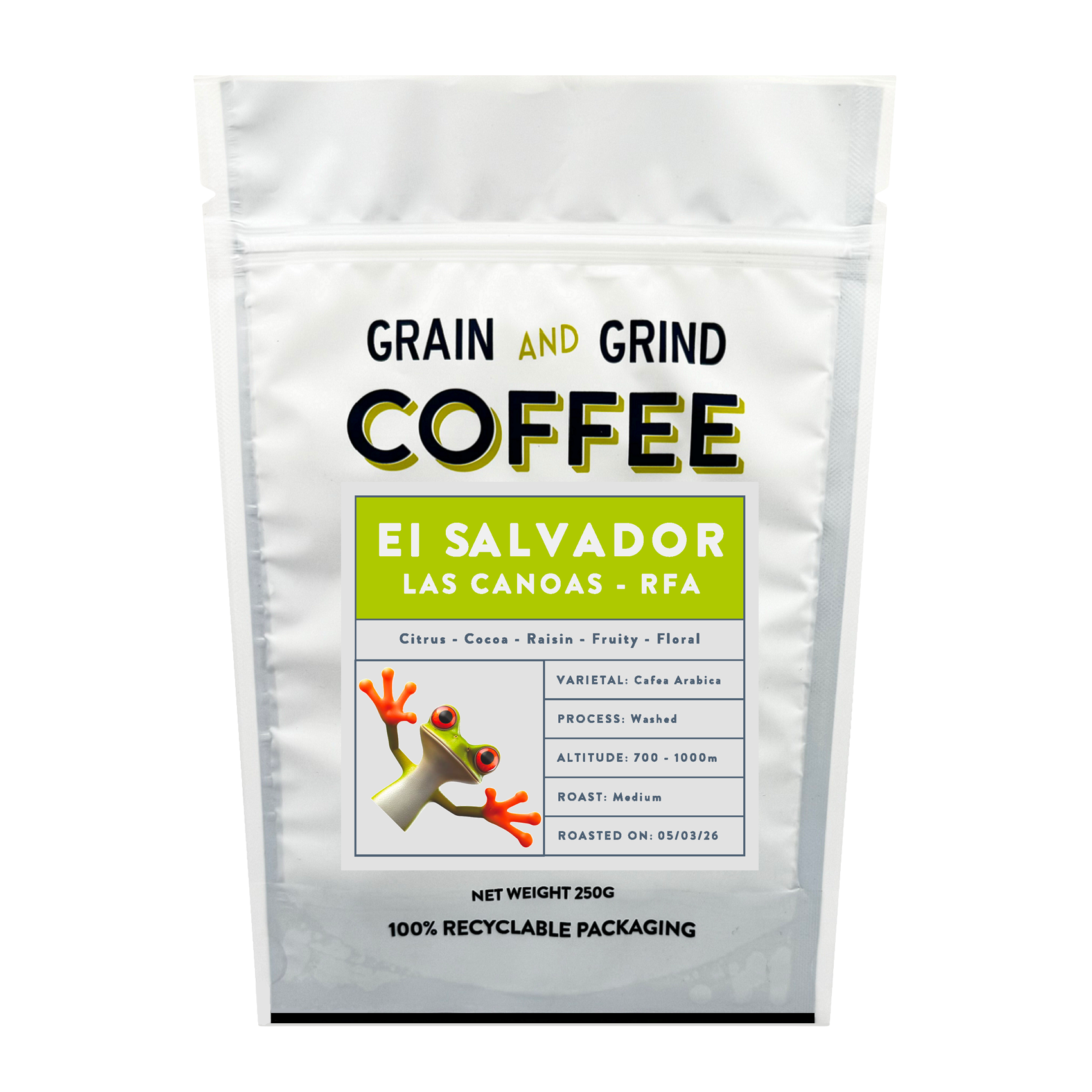

Now in their sixth-generation, brothers Enrique, Rene and Gustavo run Las Caneos alongside their two other farms. Their father Gustavo is still involved as an advisor, giving them the benefit of his experience. The Urrutias Estate coffees are 100% shade grown and native trees are planted yearly to prevent erosion. Ground cover is provided by tomatoes and with the leaves from the canopy, evaporation of water is kept to a minimum. Las Canoas is the lowest of their 3 farms, and the lower altitude and aging plants meant the farm was hit hard with a bad season in 2012. The rust epidemic hit and tired trees were just not able to recover like they had before, reducing the yield from the farm by almost 75%.
Once the worst had passed a new strategy was formed and the plan in 2019 became to replant with new trees at a rate of 28ha per year. This is split with 100 ha of cocoa and 40 under coffee, 25 of which are Marsellesa. Marsellesa was part of the
new wave of F1 coffees developed to provide more resistance to rust. Gustavo is in charge of production across the farms, but it is his brother who is in charge of San Antonio, the family mill, where all Urrutias coffees are processed. Set up in 1950, it has brick patios which heat up at a slower rate than more modern concrete, and also cool down more slowly, adding that terroir element to the processing.
Coffee is brought to Beneficio San Antonio which serves as both wet and dry mill.
Cherry is pulped through a series of depulpers, the ripe cherry being the softest is first, with harder unripe cherries moving through to a second pulper, and kept separate. There are 4 pulping stages in total, allowing for precise separation.
A ‘dry’ fermentation then occurs for 13-14 hours, where the beans are in a tank, but no water added. Parchment coffee is then washed again, and spread to dry on the brick patios.
Reviews
There are no reviews yet.