

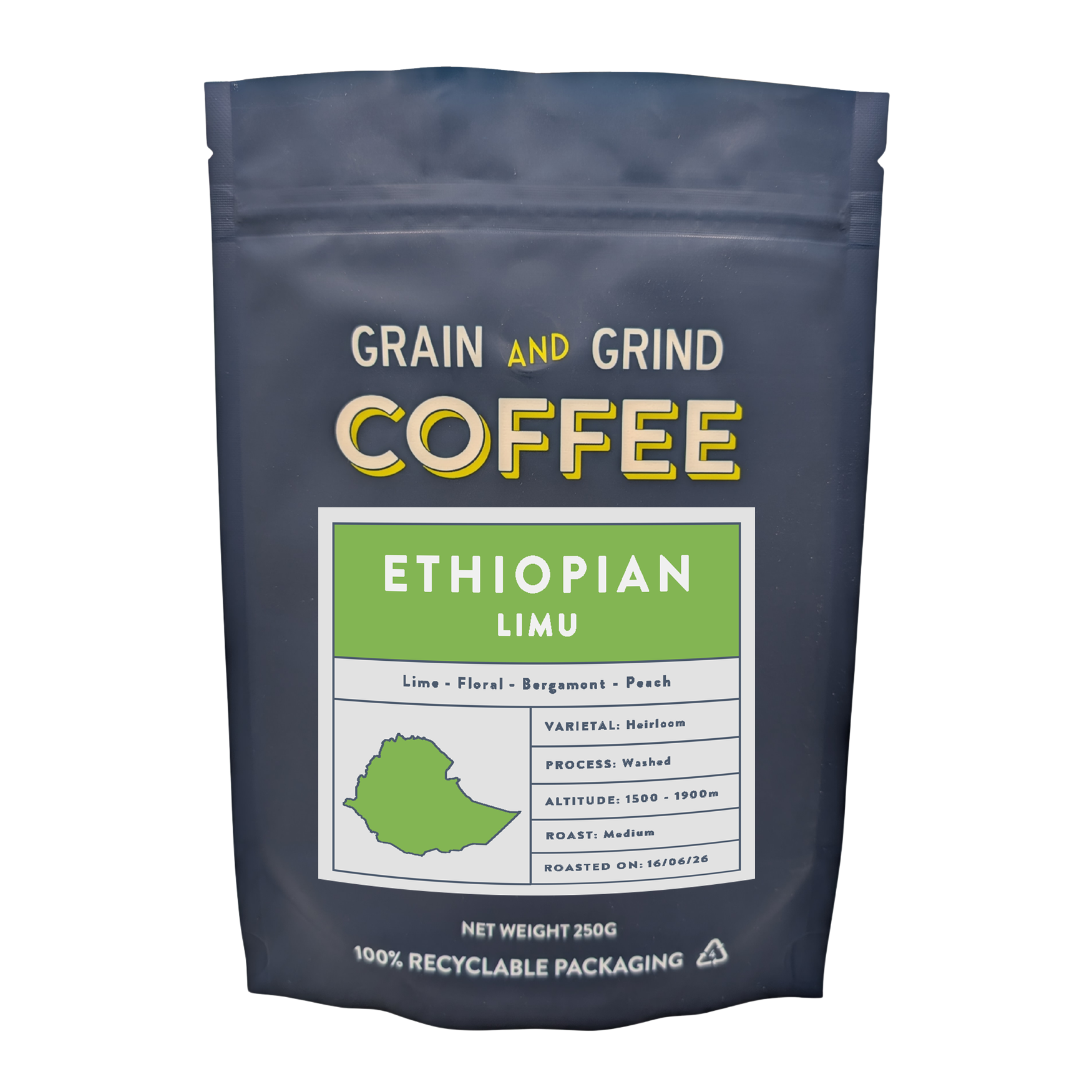

Limu is in the Oromia Region of Ethiopia. The coffee comes from around 560 of smallholder farmers in the Limu district of Oromia and is considered one of the finest highland coffees from Ethiopia. Commonly, Ethiopia coffee is collected at a centralised washing station from the many farmers that surround it, who frequently grow small amounts of coffee in ‘gardens’.
With so much natural diversity there, the attention to detail at the processing stage is key to a good coffee.
In the washed or ‘fully washed’ style of processing, the outer skin of the coffee cherry is removed immediately after harvesting, usually the same day the cherries were picked.
This is done using machines which ‘pick’ or scrape away just the outer layer of the cherry, leaving behind the parchment coffee covered in sticky mucilage. The mucilage-coated beans are then immersed in water in large, cement fermentation tanks. Good cherries will sink and bad or unripe fruit will float on the surface. Meantime, the process of fermentation breaks down the sugars in the mucilage and frees it from the parchment. This usually takes around 24 hours, though shorter or longer fermentation times are possible depending on the local climate and weather.
Once fermentation is complete, the coffee is released from the fermentation tank and pushed manually, with the help of flowing water, down long channels. This agitation frees up any remaining mucilage and separates it from the parchment coffee. At the end of the channels, the coffee enters another tank where it is rinsed with fresh water.
The coffee is then taken to dry in the sun, usually on raised ‘African drying’ beds.
Reviews
There are no reviews yet.