
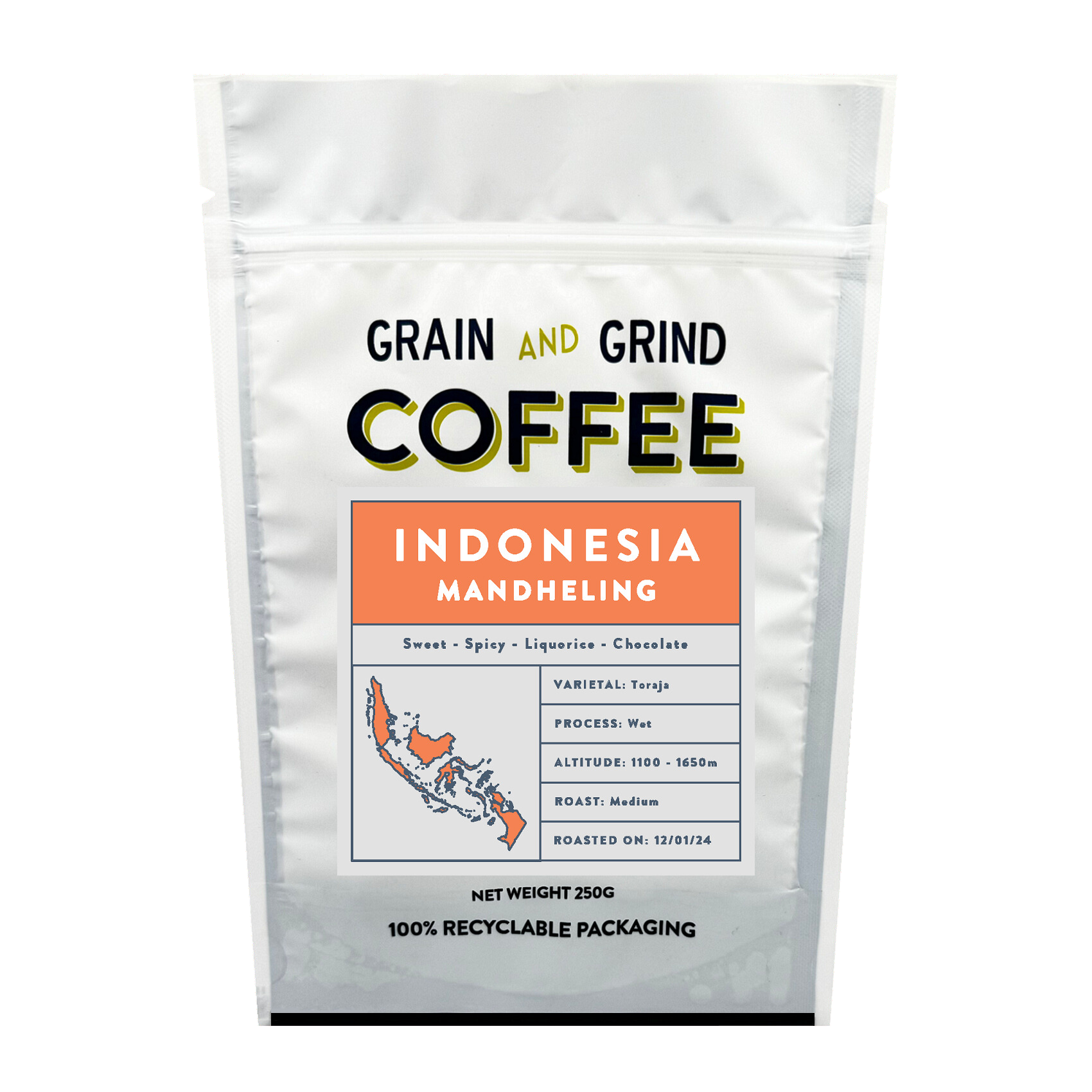

Many of Indonesia’s islands were formed by volcanoes, leaving soil rich in volcanic ash and ideal for growing coffee. It’s no surprise that some of the world’s most famous coffees are grown on the islands of the Malay Archipelago of Indonesia: Sumatra, Sulawesi, and Java.
Approximately 15% of all coffee grown in Indonesia is Arabica. Sumatra, the country’s second-largest island, produces the renowned Sumatra Mandheling coffee, grown on the lofty volcanic slopes of Mt. Leuser near the port of Padang, in the Batak region of west-central Sumatra. “Mandailing”, spelled here correctly, refers to the people indigenous to this region.
Coffee trees were originally brought to Indonesia in the early 19th century by the Dutch, who sought to break the worldwide Arabica monopoly on the cultivation of coffee. Within a few years, Indonesian coffee dominated the global coffee market. Yet by the end of the century, disease had completely destroyed the crop. Coffee trees were successfully replanted and regained a large share of the market until plantations were again ravaged during World War II.
Giling Basah, the unique method used in the production of Sumatran coffees, results in a very full body with a concentrated flavour, garnished with herbal nuances and a spicy finish. It involves hulling the parchment off the bean at roughly 50% moisture content (compared to 10 to 12% moisture in most other regions). This unique process results in Sumatra’s trademark flavour profile – a low acidity, richness that lingers on the back of the palate, and a chocolate finish – and gives the green beans their signature colour.
Reviews
There are no reviews yet.